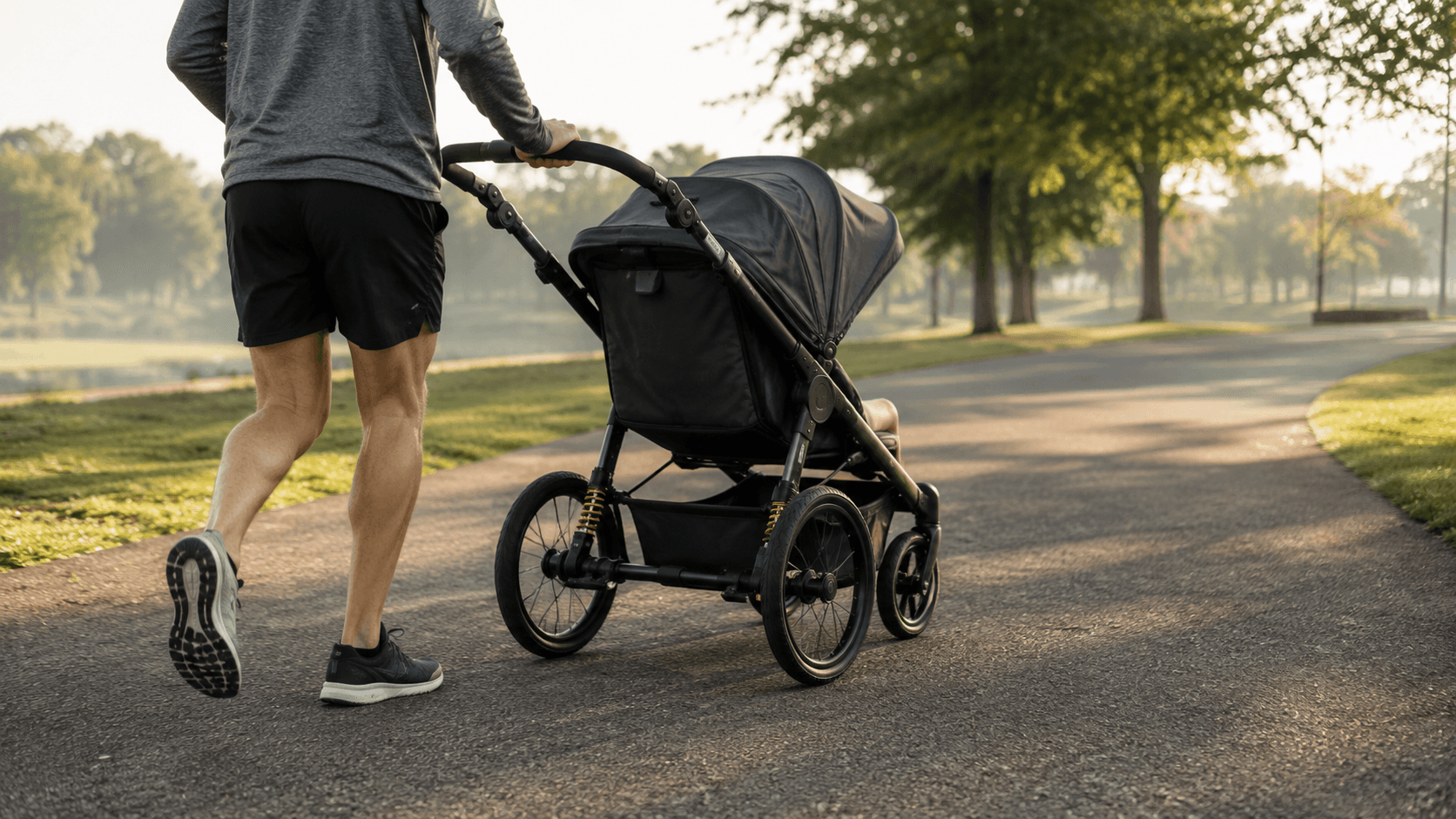
The best jogging stroller is the one the manufacturer approves for jogging and the one you can control on your actual route. Start with safety documentation, then compare the front wheel, tires, suspension, wrist strap, brake setup, handlebar feel, child harness, and terrain match. A stroller that feels excellent on a flat paved path may not be the right choice for hills, gravel, winter sidewalks, or daily trunk loading. Do not choose a jogging stroller by three-wheel styling alone.
Verify that the stroller is made for jogging
Many three-wheel strollers look athletic, but appearance is not enough. Check the manufacturer manual or product guidance before using any stroller at running pace.
A strong jogging stroller page should separate walking use, all-terrain use, and jogging use. That distinction protects readers and avoids turning a design cue into a safety claim.
Match wheels and brakes to your route
For running, front wheel behavior matters. Many jogging strollers use a fixed or lockable front wheel to reduce wobble, while swivel mode is mainly for walking and tight turns.
Hills, gravel, and rough pavement make brakes and tires more important. Compare hand brake availability, parking brake design, tire type, wheel size, suspension, and whether you are comfortable maintaining air-filled tires.
Check child comfort and harness access
A jogging stroller should keep the child secure and comfortable while the adult controls the stroller. Check the harness, recline, canopy, ventilation, seat padding, and how easy it is to buckle a moving toddler.
Follow the stroller manufacturer's guidance for child age, size, recline, and jogging use. If a child has medical or developmental considerations, ask a pediatrician before running with a stroller.
Decide whether it can be your everyday stroller
Jogging strollers are usually larger than compact everyday strollers. Before buying one as your only stroller, measure your trunk, entryway, elevator, and storage area.
The right choice may be a jogging stroller plus a separate compact stroller, or one all-terrain stroller that handles walking routes well. The answer depends on how often you actually run and how much space you have.
Jogging Stroller Must-Haves
Manufacturer running guidance
Do not rely on wheel count or styling. Confirm that the brand says the stroller is intended for jogging or running use.
Control at speed
Compare front wheel behavior, wrist strap, parking brake, hand brake, tire type, and handlebar stability.
Terrain match
Paved paths, hills, gravel, and winter sidewalks create different wheel and suspension needs.
Jogging Stroller Questions
Can any three-wheel stroller be used for jogging?
Do I need a hand brake on a jogging stroller?
Can a jogging stroller replace an everyday stroller?
Method and Sources
How this page is checked
- This guide treats running approval as a required first check, not a feature inferred from stroller shape.
- Product recommendations should verify current manuals, wheel and brake specs, and child-use limits directly from each manufacturer.
Sources
Keep reading
Stroller Types Explained
A clear overview of full-size, lightweight, travel, jogging, double, wagon, and travel-system strollers.
Read nextHow to Choose a Stroller Without Overbuying
A stroller buying framework for matching stroller type, child age, storage, terrain, car-seat use, and budget to your real routine.
Read next