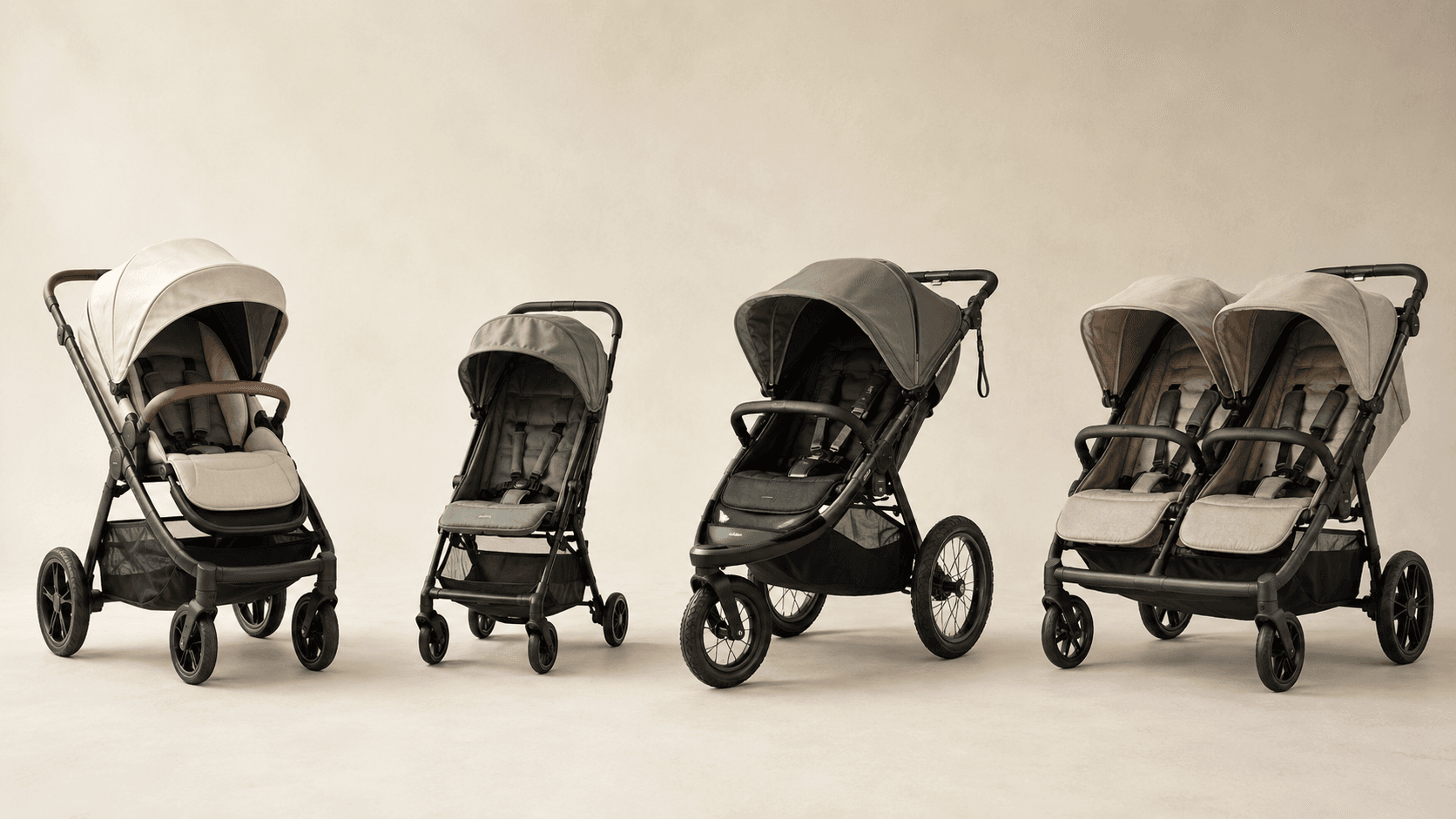
Stroller types overlap, but each category has a core job. Full-size strollers focus on everyday comfort and storage. Travel strollers focus on portability. Jogging strollers focus on speed control and terrain. Travel systems focus on infant car-seat handoff. Double and convertible strollers solve two-child routines. Understanding the job of each type helps you ignore features you do not need and compare the tradeoffs that will actually show up in daily use.
Full-Size Strollers
Full-size strollers usually prioritize seat comfort, basket storage, handle ergonomics, larger canopies, and compatibility with infant accessories.
They are strong everyday candidates for sidewalks, errands, and longer outings. The tradeoff is weight and folded size, especially if you have stairs, a small trunk, or limited entryway storage.
Travel And Lightweight Strollers
Travel strollers prioritize fold size and portability. Lightweight strollers overlap with travel models, but not every lightweight stroller is built around airplane use.
Compare folded dimensions, carry method, canopy, recline, and wheel behavior instead of sorting only by weight. A slightly heavier travel stroller can be easier to live with if it folds cleanly and rolls better.
Jogging And All-Terrain Strollers
Jogging strollers need manufacturer-approved running use and speed-control features. All-terrain strollers may handle rough surfaces well without being intended for jogging.
This distinction is important because a stroller can have large wheels and still be a walking stroller. For jogging, verify the manual or brand guidance before running.
Travel Systems
A travel system pairs a stroller with a compatible infant car seat, often making car-to-stroller transfers easier during the first months.
The convenience can be real if you drive frequently. The tradeoff is that the stroller itself may be larger than a compact option, and the infant car-seat phase is temporary.
Double And Convertible Strollers
Double strollers are for two-child routines now. Convertible strollers start as a single and can add a second seat or board later, depending on the model.
Before choosing one, compare width, length, turning radius, folded size, second-seat limits, basket access with two children, and whether both children get the seat positions they need.
Quick type chooser
| Your main need | Start with | Avoid starting with |
|---|---|---|
| Newborn plus errands | Full-size or travel system | Umbrella-style stroller without newborn support |
| Flights and small spaces | Travel or compact stroller | Heavy full-size stroller |
| Running | Jogging stroller approved for running | Sporty-looking stroller without running guidance |
| Two kids | Double or convertible stroller | Single stroller with no expansion path |
Method and Sources
How this page is checked
- This page explains categories, not individual product rankings.
- Specific model recommendations should verify manufacturer age, weight, car-seat, bassinet, and jogging-use guidance.
Sources
Keep reading
How to Choose a Stroller Without Overbuying
A stroller buying framework for matching stroller type, child age, storage, terrain, car-seat use, and budget to your real routine.
Read nextBest Jogging Strollers: What to Check Before You Run
Compare jogging strollers by running approval, front wheel design, suspension, brakes, child comfort, folded size, and everyday usability.
Read next